Why computer vision still misses what humans catch
You’ve probably seen a vision model label a stop sign correctly in a clean photo, then fail when the sign is partly covered by a sticker, seen at dusk, or photographed at an odd angle. Humans handle those shifts with little effort because we don’t treat each frame as a fresh puzzle. We use context, expectations, and quick “sanity checks” built from experience to fill in missing pieces.
Many conventional computer vision systems, especially feed-forward CNN-style pipelines, still lean heavily on surface cues: textures, frequent backgrounds, and correlations in the training set. When those cues change—different lighting, blur, unfamiliar environments, or small adversarial-looking perturbations—the model can become confidently wrong. Fixes like more data augmentation and larger datasets help, but they’re costly, and they don’t fully address the underlying issue: the system often lacks a built-in way to revisit uncertain details, resolve ambiguity over time, or reason about what should be there.
What “brain-like vision” actually means in modern AI
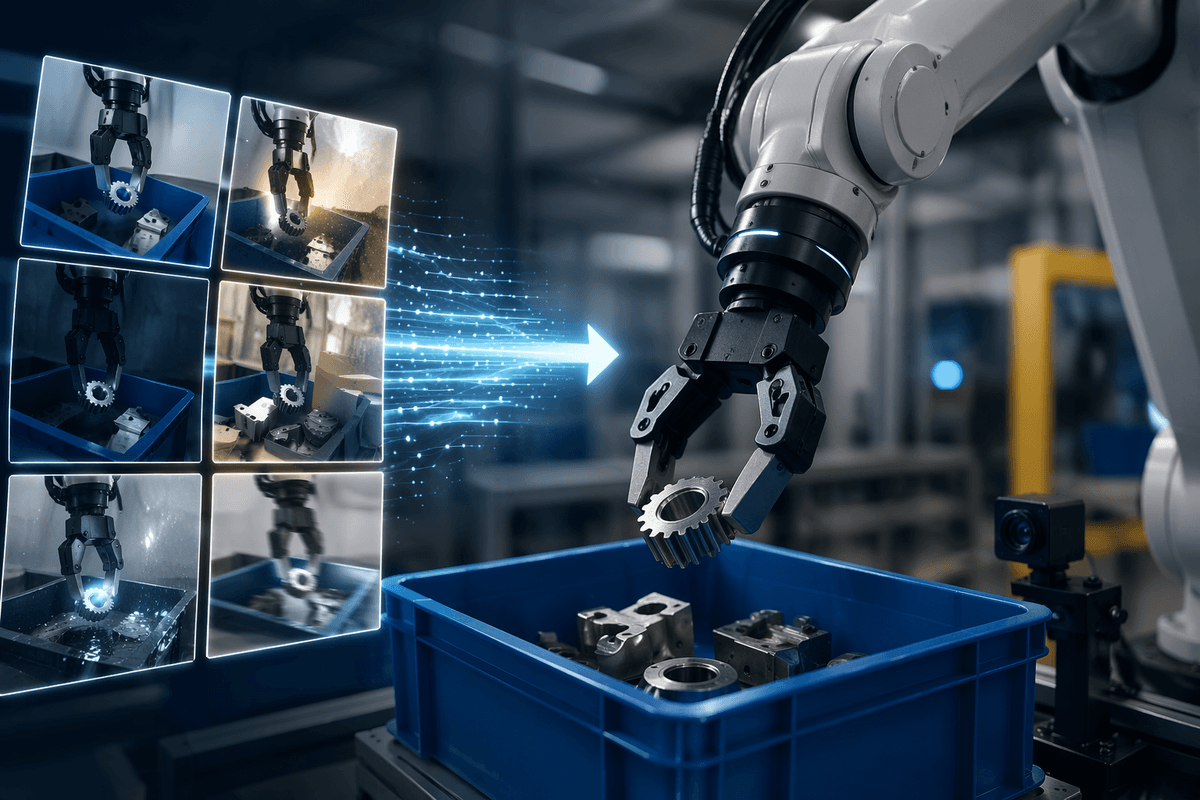
In modern AI, “brain-like vision” usually doesn’t mean copying biology in detail. It means adding a few missing capabilities that humans rely on when a single glance isn’t enough: updating an internal scene representation over time, selectively focusing on what matters, and using expectations to interpret noisy input. Instead of a one-pass pipeline that maps pixels straight to labels, these models keep a working memory and refine their guess as evidence accumulates.
Concretely, that shows up as recurrence (looping information back through the network), attention mechanisms that prioritize regions or objects, and predictive setups where the model learns to anticipate what it should see next. The practical promise is better behavior under occlusion, motion blur, or shifting environments—common in robotics, autonomy, and some medical imaging workflows. These designs often cost more to run and tune: extra compute per frame, more opportunities for instability during training, and higher latency when you need multiple “looks” to decide.
Key ingredients: recurrence, attention, and predictive processing
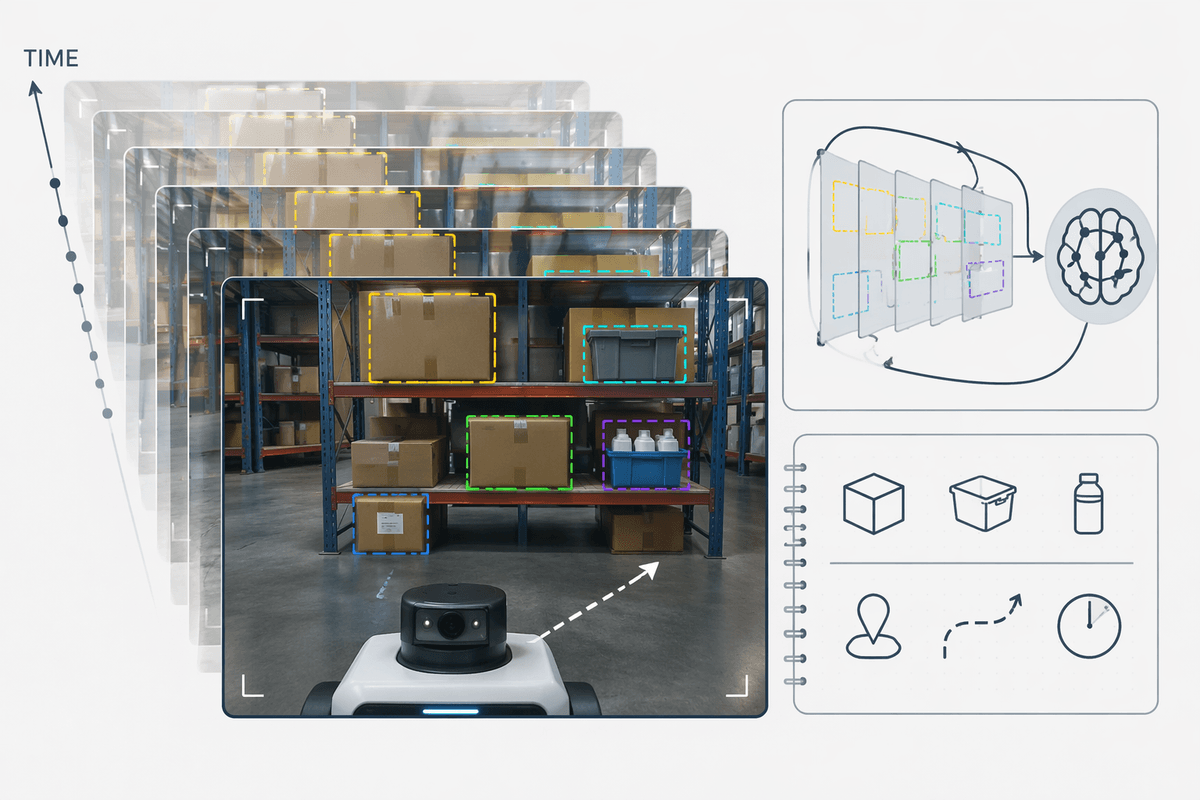
Picture a warehouse robot rolling past shelves: one camera frame shows a box edge, the next shows a label, and a third reveals a hand briefly blocking the view. Recurrence is the simple idea that the model shouldn’t throw away what it just saw. It loops information forward so later frames can clarify earlier ambiguity, like keeping a scratchpad of “likely objects” and updating it as new evidence arrives.
Attention adds selectivity. Instead of spending equal capacity on every pixel, the model learns to concentrate compute on the region that could change the decision—say, the occluded corner of a sign rather than the sky behind it. In practice, attention can also be structured: first find candidate objects, then zoom in for fine details. This often improves robustness, but it can introduce failure modes where the model locks onto the wrong cue and stays there.
Predictive processing is the expectation layer: the system learns what should be visible next, given motion and context, and treats mismatches as a signal to re-check. That can reduce confusion under noise, but it raises deployment costs—extra compute per frame, more tuning to keep the feedback loop stable, and sometimes higher latency when the model needs multiple refinement steps.
Where it beats standard CNNs—and where it doesn’t
Consider a security camera view where a face is half in shadow, or a forklift briefly blocks the person you care about. A standard feed-forward CNN often has one shot to decide, so it may overcommit to whatever cues are most visible in that moment. Brain-inspired setups tend to do better when the answer benefits from accumulating evidence: tracking an object through occlusion, disambiguating similar-looking parts across frames, or stabilizing predictions under blur and jitter. They can also be more data-efficient for some tasks because the model learns a reusable “world model” (what tends to persist, what can change) instead of memorizing one-off textures.
That advantage shrinks when the problem is already well-captured by a single, clean image: product photo classification, many document scans, or controlled industrial inspection where lighting and viewpoint are fixed. In those settings, big CNNs (or CNN-like backbones) can be simpler, faster, and easier to validate. The feedback loops that help with ambiguity also create practical costs: more inference steps, harder-to-predict latency, and more knobs to tune. And if attention focuses on the wrong region early, recurrence can reinforce the mistake rather than correct it.
Data, compute, and latency trade-offs in real deployments
On a demo video, a few extra refinement steps can look like “free accuracy.” In a deployed camera pipeline, those steps turn into concrete costs: more GPU time per frame, higher power draw on edge devices, and less headroom when you need to run detection, tracking, and logging in parallel. A feed-forward model is usually closer to fixed-cost inference: one pass, predictable throughput, and straightforward batching. Recurrence and iterative attention behave more like a budget you can overspend when scenes get messy.
These models often benefit from sequential data and training setups that expose them to occlusion, motion, and sensor noise, which can be harder to collect and label than static images. Latency is the user-facing constraint: if your robot must brake within tens of milliseconds, “think twice” may be unacceptable unless you cap iterations, reduce resolution, or offload compute—each with accuracy and reliability consequences.
How to evaluate claims: benchmarks, robustness, and bias
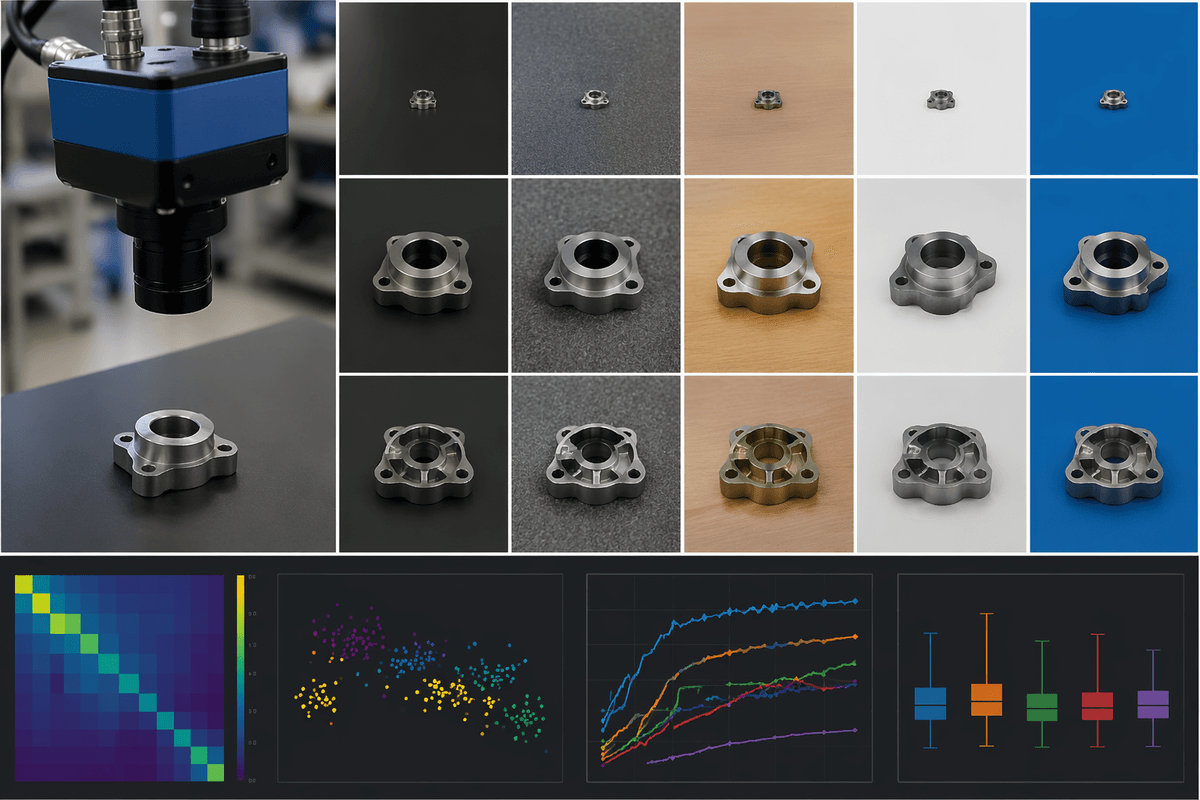
When you see a claim like “brain-like vision is more robust,” look for evidence beyond a single leaderboard score. Good evaluations show performance across clean data and stress tests: occlusion, blur, lighting shifts, camera motion, and out-of-distribution scenes (new sites, new sensor types, new object variants). Even simple checks—does accuracy collapse when the background changes, or when the object is smaller than usual—often reveal whether the model learned the task or the dataset’s shortcuts.
Insist on comparisons that match constraints. If one model gets multiple refinement steps, report accuracy versus time and power, not just “best possible” numbers. Ablations matter: what happens if you remove recurrence, limit attention steps, or turn off the predictive loss? Without that, “brain-like” can be branding layered on a larger backbone and more compute.
Finally, bias can hide inside “robustness.” Ask for slices by environment, device, and demographic proxies where relevant, plus calibration (how often confidence matches reality). These checks cost time and data, but they’re what separates a promising idea from a fragile demo.
Choosing the right approach for your vision problem
If your camera problem is mostly “single clean image in, label out” with stable lighting and viewpoint, start with a strong feed-forward baseline (often a modern CNN-like backbone or ViT) and spend effort on data quality, augmentation, and calibration. You’ll usually get predictable latency, easier debugging, and simpler acceptance tests.
Reach for recurrence, iterative attention, or predictive objectives when time matters to the task: tracking through occlusion, reducing jitter in video, handling blur, or operating in new environments where shortcuts break. These approaches are most defensible in robotics, autonomy, and messy sensor setups.
Budget for the hard parts: sequential data collection, tuning stability, and worst-case latency. If you can’t cap inference steps or measure power on target hardware, “more robust” can turn into “less deployable.”