Where algorithms already guide your daily choices
You probably interact with algorithms dozens of times before lunch, even if you never call them that. Your phone suggests which email is “important,” your map picks a “fastest” route based on live traffic, and your streaming app lines up a row of “because you watched…” options. Online stores decide which products appear first, which reviews rise to the top, and which “deal” gets highlighted. Even your bank may flag a purchase as suspicious based on patterns it’s learned.
Most of these systems are doing the same basic job: sorting too many options into a short list you can act on. That shortcut can save time, but it also quietly shapes what you notice, what you ignore, and what feels “normal.” The sorting is based on the data available—your past behavior, what similar people did, and what the platform can measure—so convenience often comes with trade-offs like missed context, privacy costs, or nudges that don’t match your real priorities.
From messy inputs to a recommendation you can act on
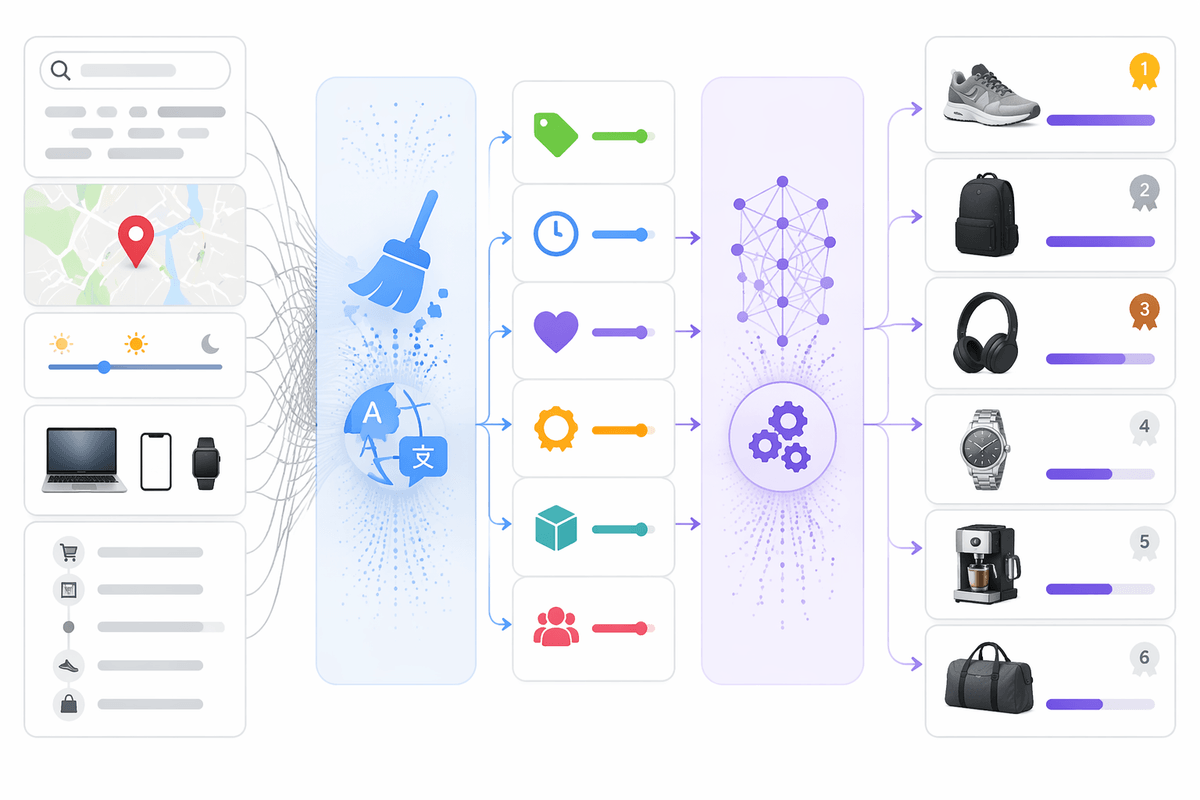
Think about typing a few letters into a search box and seeing useful options appear before you finish. Behind that quick suggestion is a lot of “messy” input: what you typed, what people usually mean by similar queries, your location, your device, the time of day, and your past clicks. The algorithm’s first move is cleaning and translating that input into signals it can compare—like whether you tend to choose cheaper options, shorter travel times, or familiar brands.
Then it scores the available choices. Each item gets a rough “fit” number based on patterns in the data, and the system ranks the list so you can pick fast. That score isn’t truth; it’s a best guess built from what’s measurable. If the data is thin (new product, new user, unusual situation) or the goal is misaligned (maximizing engagement instead of usefulness), the recommendation can look confident while being off in ways you only notice after you act on it.
When algorithms save time: filtering, ranking, and shortcuts
You feel the time-saving effect most when the choice set is huge and the cost of “just browsing” is real. A workday inbox with thousands of messages becomes a manageable queue when spam filters, priority labels, and “focused” views push likely junk down and likely-action items up. A travel search that might take an hour turns into a few strong candidates because the system narrows by availability, price range, and what people like you tend to book. Even a long document becomes quicker to use when search ranks the most relevant passages first.
Ranking is the shortcut, but it’s also a bet about what matters. Many systems optimize for a proxy that’s easy to measure—clicks, watch time, response rate—not your full goal, like “find something reliable” or “pick a hotel I won’t regret.” The algorithms can’t read your mind, and they rarely have the time or data to evaluate every option deeply, so they use fast signals and reuse what worked before. That saves minutes now, but it can quietly narrow your choices, especially if you rarely scroll past the first few results.
When they improve outcomes: prediction, planning, and prevention

You notice the biggest “outcome” gains when an algorithm isn’t just sorting options, but anticipating what will happen if you choose one. Navigation apps don’t only rank routes; they forecast travel time and reroute around a slowdown before you reach it. Credit card systems try to predict fraud so a stolen number gets blocked quickly, while legitimate purchases go through. Calendar and project tools estimate how long tasks take based on your past patterns, helping you plan work that actually fits the day.
Prevention is where this can feel most concrete. A health wearable may flag an unusual heart-rate pattern, a password manager warns about reused logins, and a cloud service scans for suspicious sign-ins. None of these are perfect, and false alarms have a cost—missed payments, extra verification steps, or stress from warnings that turn out to be nothing. The helpful ones make their guess visible (what changed, how confident) and give you an easy way to confirm or override before the system “protects” you into a problem.
The trade-offs: bias, blind spots, and feedback loops
Bias is often easiest to recognize in ordinary interactions rather than dramatic failures. The same creators dominate recommendations, a job alert keeps reflecting an outdated version of your interests, or a search engine seems to anticipate a question you never intended to ask. Those patterns usually emerge because historical data becomes the model's view of reality. When earlier data reflects unequal exposure, inconsistent enforcement, or participation that favored certain groups over others, those imbalances become embedded in future predictions. No malicious intent is required—the system simply performs better where it has abundant examples and less reliably in situations that appear less often.
Many of these limitations stem from information that is difficult to capture directly. Navigation software cannot easily quantify how pleasant a walk feels, email filters struggle with nuance and tone, and shopping platforms cannot tell whether a purchase is a one-off gift or the beginning of a long-term preference. To fill those gaps, models rely on measurable signals such as clicks, response speed, and repeat purchases. Those proxies make decisions faster, but they also strip away context. Recovering that missing context usually requires additional investment through human review, richer data, or slower decision-making.
Recommendation systems also reinforce themselves over time. Items that begin near the top receive more attention, which generates stronger engagement signals and pushes them even higher in future rankings. As interactions accumulate, the system learns from behavior that has already been shaped by its earlier recommendations. Over time, personalization can become increasingly narrow, gradually steering familiar choices toward routine rather than helping people discover genuinely new ones.
How to use algorithmic advice without handing over control
You’ve probably had the experience of feeling “pulled” toward whatever is already at the top: the first route, the first search result, the first suggested video. A simple way to stay in charge is to treat the recommendation as a draft, not a verdict. Before you click, name what you actually want in plain terms—cheapest, fastest, least risky, most durable, most readable—and notice when the app’s ordering seems to optimize something else, like speed of completion or time-on-screen.
Build small friction into high-stakes choices. For purchases, open two tabs and compare the top pick with something outside the first page. For news or research, scan past the first few results and look for a primary source or an outlet with different incentives. For navigation, check whether “fastest” saves two minutes but adds a tricky turn or an unsafe street at night. This takes extra time, and that’s the real cost: you’re paying a few minutes now to avoid a bigger regret later.
Use the controls that change what the system learns. Clear or pause watch history when your clicks are “just killing time,” turn off personalized ads where possible, and separate one-off needs (gift shopping, medical searches) into a private window. When an app offers “not interested” or “show less,” use it like steering, not complaining—it’s one of the few levers you get.
A simple way to judge an algorithm’s help today
Picture the moment you’re about to accept the default: the top search result, the “recommended” product, the fastest route. A quick test is to ask three questions: What is it optimizing for, what might it be missing, and what does it cost me if it’s wrong? If the downside is small (a song, a lunch spot), take the shortcut and move on. If the downside is large (money, safety, reputation), slow it down: check one alternative outside the top results, look for a primary source, or change one filter. The point is matching trust to stakes.