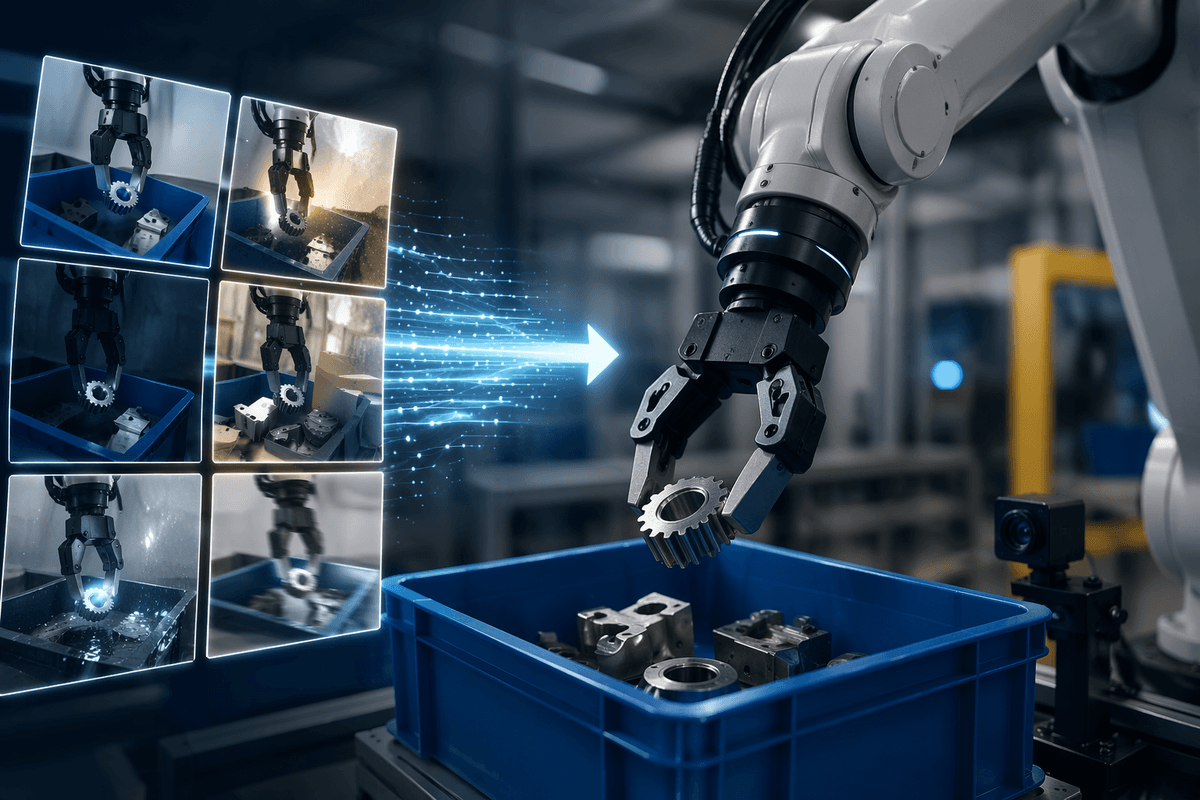
Why muscle-signal lifting feels like the next interface
You’ve probably seen a robot arm lift a box when someone clicks a button, nudges a joystick, or points at an object on a screen. Muscle-signal (EMG) lifting feels like a different class of interface because it moves the “intent” upstream: the user doesn’t command the robot by describing motion, but by activating the same muscles they’d use to lift themselves. That can make control feel faster and more natural, especially for repetitive assists like picking, placing, or stabilizing a load.
The appeal is also pragmatic. EMG can work when hands are busy, gloved, or shaky, and it avoids camera-only systems that struggle with occlusion. But it’s not magic: electrodes must be placed well, signals drift with sweat and fatigue, and users often need calibration and practice. The promise is a lower-friction loop between human effort and machine force—if the system can stay reliable under real-world noise.
Which muscle signals are usable, and what they really mean
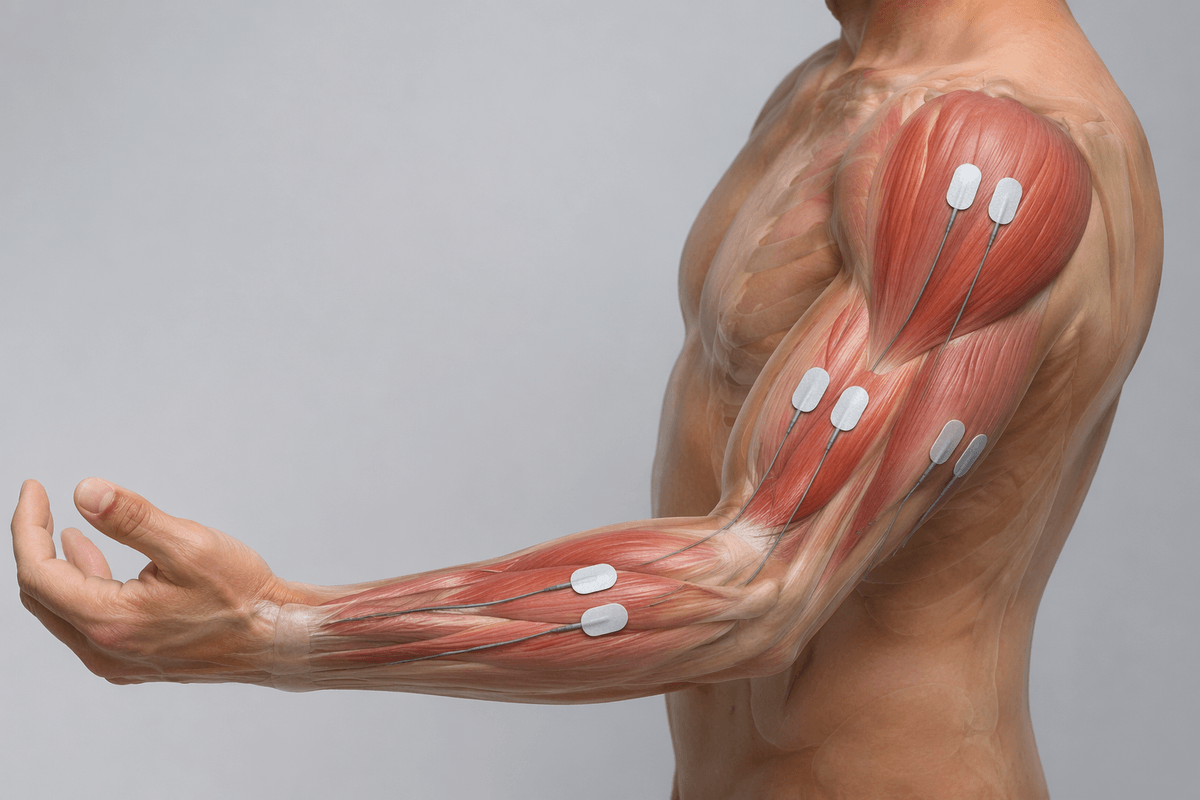
A familiar moment: you tense your forearm to pick up a mug, and the tension comes before the mug moves. Surface EMG tries to capture that “pre-motion” activity through electrodes on the skin. In practice, the most usable signals are from big, superficial muscles close to the sensor—forearm flexors/extensors for grasping and wrist direction, biceps/triceps for elbow effort, and shoulder muscles for gross lifting intent. Deep muscles and fine finger motions are harder because their activity blends together at the skin.
What EMG usually “means” is not a specific joint angle, but a proxy for effort or a small set of discrete intentions: open/close hand, lift/hold/lower, speed up/slow down. Amplitude rises with force, but also with fatigue, electrode shift, and even posture, so the same signal can imply different real forces across a day. That’s why many systems limit the command vocabulary or require quick recalibration.
From electrodes to commands: the processing pipeline in practice
Picture a sleeve with a few sticky pads on your forearm. Each electrode pair measures tiny voltage changes, which are immediately amplified and digitized, then cleaned up with basic filtering (to remove motion artifacts and mains hum) and rectified so “more activation” looks like a bigger, steadier signal. Instead of using raw waveforms, most systems compute short-window features every 20–50 milliseconds—often RMS/mean absolute value for effort, plus a couple of frequency features to catch fatigue or bad contact.
Those features feed a mapper: either a classifier that picks from a small menu (open/close, lift/hold/lower) or a regressor that outputs a continuous value like “assist torque” or “lift speed.” A smoothing step prevents twitchy commands, and a deadband ignores small accidental tenses. The last stage translates intent into safe robot motion limits—rate caps, force caps, and a “hold” default if confidence drops. The practical cost is setup time: placing electrodes, recording a calibration set, and redoing it when sweat, sleeves, or fatigue shift the baseline.
Control choices: direct control, shared control, or full autonomy
Consider what you actually want EMG to “drive.” In direct control, muscle activity maps closely to motion—squeeze to close a gripper, flex to lift faster, relax to stop. It can feel responsive, but it’s also unforgiving: noise, co-contraction, or fatigue can turn into unintended movement, so you end up adding heavy smoothing and speed limits that make it less “instant” than the demo suggests.
Shared control is the common compromise. EMG supplies high-level intent (start lift, increase assist, hold), while the robot handles the stabilizing details—keeping the wrist level, maintaining grip force, and limiting acceleration if the load shifts. This usually improves safety and reduces training time, but it adds a dependency on good sensing and tuning; a poorly tuned assist can feel like lag or “fighting” the user.
Full autonomy flips the role: EMG becomes a trigger or mode switch, and perception/planning decide the grasp and trajectory. It can be robust for routine picks, yet it’s harder to trust around clutter, unknown objects, or people, because errors are less predictable and harder for the user to correct mid-lift.
Grasping and lifting: what the robot must sense and stabilize
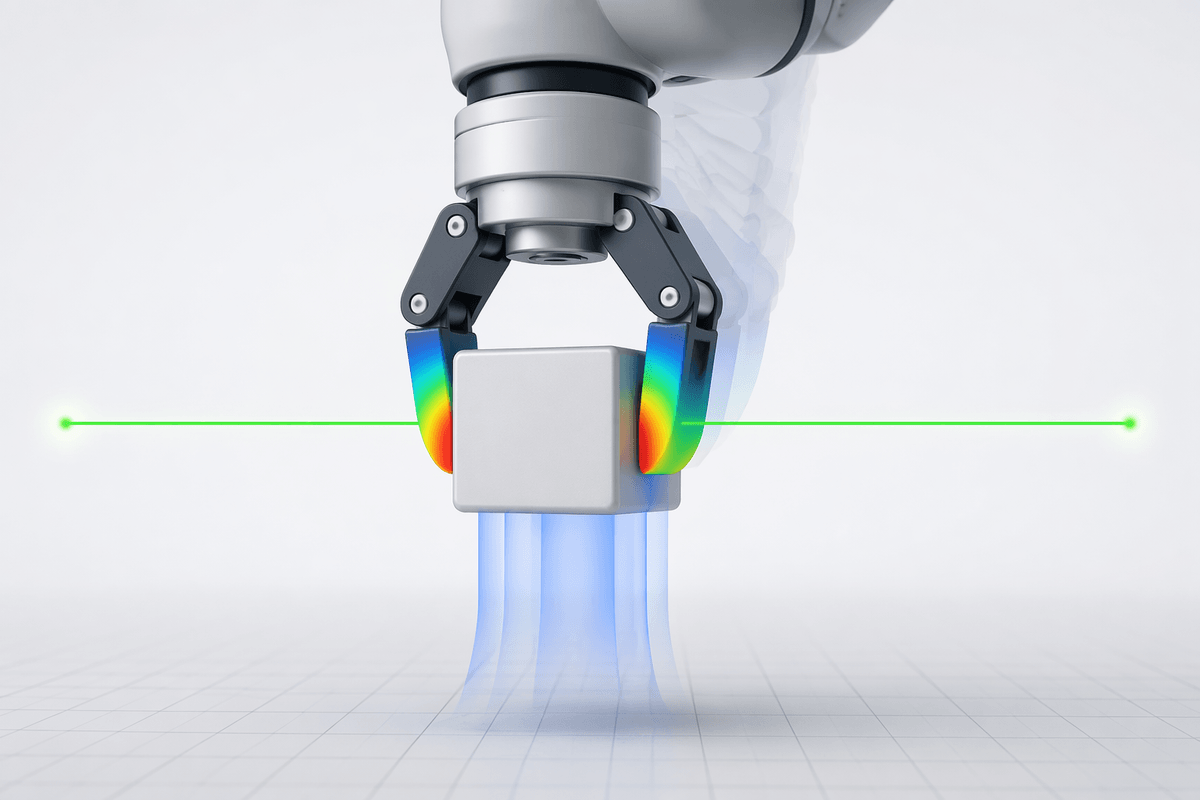
Think about lifting a grocery bag: the hard part isn’t “move up,” it’s keeping the grip from slipping, keeping the wrist from tipping, and reacting when the load swings. EMG can tell the robot you’re trying to grasp or lift, but it doesn’t tell it where the object sits in the gripper, whether contact is solid, or whether the bag is tearing. So reliable lifting usually depends on additional sensing—finger position, motor current, tactile pads, or a small force/torque sensor at the wrist—to confirm contact and estimate load changes.
Once contact happens, the robot has to stabilize a few variables continuously: grip force (enough to prevent slip, not enough to crush), lift acceleration (to avoid jerks), and orientation (to keep liquids level or tools aligned). The slip detection and grip adjustments need fast loops, while EMG is often smoothed to avoid false triggers, so the “feel” comes from the robot’s local reflexes more than the muscle signal itself.
Safety and comfort: preventing mis-lifts, fatigue, and surprises
Anyone who’s carried a box one-handed knows the risk isn’t constant force—it’s the sudden slip, the bump into a doorway, or the reflexive “catch” that your body handles automatically. EMG control has to earn trust in those moments, because an accidental clench can look like “lift,” and fatigue can make effort signals creep upward even when you’re trying to hold steady. Practical systems lean on layered safeguards: intent confirmation (a short dwell, double-pulse, or confidence threshold), conservative ramp-up on lift speed, and a “hold” or slow-release default when the signal becomes ambiguous.
Tight sleeves, adhesive irritation, and pressure points from electrode pods can limit wear time, and the user may over-tense to get a clearer command, which accelerates fatigue. Good designs reduce required contraction (high gain with caps), provide a physical or voice emergency stop, and use haptic/audio feedback so users don’t discover a mode change only after the arm starts moving.
Prototype checklist: what you can build with off-the-shelf parts
A realistic starter build looks like a “signal-in, safe-assist-out” loop rather than a fully EMG-driven robot. You can get surface EMG from an armband or electrode module with an instrumentation amplifier, sample it with a microcontroller (or a small DAQ), and stream features over USB/BLE into a laptop running a simple classifier/regressor. Pair that with a small collaborative arm, a cable-driven winch, or even a motorized hinge with torque limiting, then keep the command set small: trigger lift, scale assist, hold, and release.
Budget for the unglamorous parts: electrode consumables, skin prep, strain relief on leads, and a repeatable placement jig so calibration isn’t a daily science project. Add at least one independent safety channel that doesn’t rely on EMG—hardware e-stop, a deadman switch, and current/force limits in the motor controller. If you include tactile/force sensing, integration time often exceeds the EMG work, but it’s what makes “lift” behave like a controlled carry instead of a risky tug.
Where muscle-controlled lifting fits—and where it doesn’t yet
Picture the settings where “hands busy” control matters: rehab exercises that reward consistent effort, prosthetic or orthotic assist where the user already thinks in muscle activation, and light industrial handling where an operator wants a quick “assist more/hold” input without looking away. In those lanes, EMG is often best as a high-level throttle or trigger paired with solid local sensing and conservative force limits.
It fits less well when conditions vary fast—sweaty shifts, bulky PPE, long wear time, or highly diverse objects—because electrode placement, drift, and fatigue force retraining and tighter speed caps. It also struggles for precise, low-effort intent (“do nothing”) and for heavy lifts near people unless there’s a separate, trusted safety channel and a clear manual override.